Teaching Philosophy
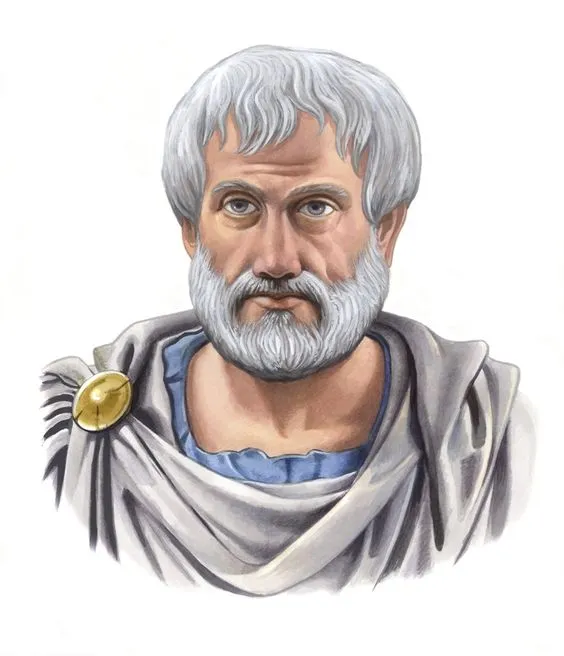
“For the things we have to learn before we can do them, we learn by doing them.”
— Aristotle, Nicomachean Ethics, Book II
Learning environment
I aim to create an active, respectful and supportive learning environment. Students should feel comfortable asking questions, sharing ideas, testing different approaches and learning from mistakes.
I give students clear learning goals, practical instructions and regular feedback. At the same time, I give them space to work independently and develop confidence in their own decisions. I believe that students learn best when they understand what they are doing, why they are doing it and how it connects with their studies or future work.
How I teach
My teaching follows a clear sequence: explain, demonstrate, practise, discuss and reflect.
I divide complex topics into smaller and more manageable steps. I use concise explanations, diagrams, live demonstrations, practical exercises and discussion. Students first see how a method works, then apply it themselves and finally explain what their results mean.
Technology supports this process, but it is not the purpose of teaching. I use tools such as Python and Jupyter Notebook when they make the learning process clearer. Students can see each stage of an analysis, from preparing the data to interpreting and reporting the results. They also learn to document their work so that another person can understand and repeat the analysis.
Connecting theory with practice
I use familiar situations and real data to explain abstract ideas.
When teaching finance, for example, I explain present and future value through an everyday decision such as saving money to buy a car. Students can then see how time, interest rates and financial choices affect the result.
In statistics and data analytics, I use real survey and social science datasets. Students do more than calculate a statistic or run a test. They learn why a method is used, what assumptions it makes, what the result means and what its limitations are. This helps them connect research questions, theory, data, methods and evidence.
Current teaching at the University of Turku
I currently teach Data Analytics with Python for Social Sciences I (SOST0091) at the University of Turku. This five-credit course provides a low-threshold introduction to Python-based data analysis for social science students. No previous Python experience is required.
Students learn how to:
- understand the basic logic of quantitative social research;
- connect theories and concepts with variables and measurement;
- clean, organise and analyse social science data;
- create clear tables, statistics and visualisations;
- conduct and interpret t-tests, chi-square tests and analysis of variance;
- evaluate assumptions, limitations and possible sources of bias; and
- produce transparent and reproducible analyses in Jupyter Notebook.
The course uses datasets such as the European Social Survey, the General Social Survey, the World Inequality Database and the Humanitarian Data Exchange. Learning takes place through lectures, computer laboratories, weekly exercises, a data analysis report and a final mini-project. Students may also use their master’s thesis data when it is suitable for the course.
Supporting different learners
Students enter the classroom with different educational, cultural and technical backgrounds. I therefore use plain language, step-by-step demonstrations and examples from several fields.
I provide clear instructions and make learning materials available through the course platform. These materials may include recorded lectures, open-access readings, presentation slides, coding notebooks and weekly guidance. Students are not expected to purchase additional course materials.
My assessment methods are explained at the beginning of the course. Students know what they need to complete and how their work will be evaluated. Feedback identifies what they have done well and what they should improve next.
Development as an educator
My teaching experience began at Islamic Azad University, where I taught finance, taxation, accounting, investment and computer applications between 2011 and 2014. This work taught me how to explain technical ideas to undergraduate students through practical examples.
I later taught information behaviour at Åbo Akademi University and Data Analytics and Statistics in Python at Metropolia University of Applied Sciences. At Metropolia, I designed practical coding exercises, taught statistical methods and supervised student mini-projects using real-world data.
I have also completed the 60-credit International Professional Teacher Education programme at Häme University of Applied Sciences. My studies and teaching experience have strengthened my commitment to inclusive instruction, clear assessment, practical learning and reproducible research.
My goal is to help students develop useful skills, understand the logic behind the methods they use and become more confident in conducting independent research.
Loading comments…