- Institution
- Åbo Akademi University
- Programme
- International Master’s Programme in Governance of Digitalisation
- Level
- Master’s level
- Teaching language
- English
- Last taught
- Spring 2024
- Prerequisite
- Information Behaviour I
Course description
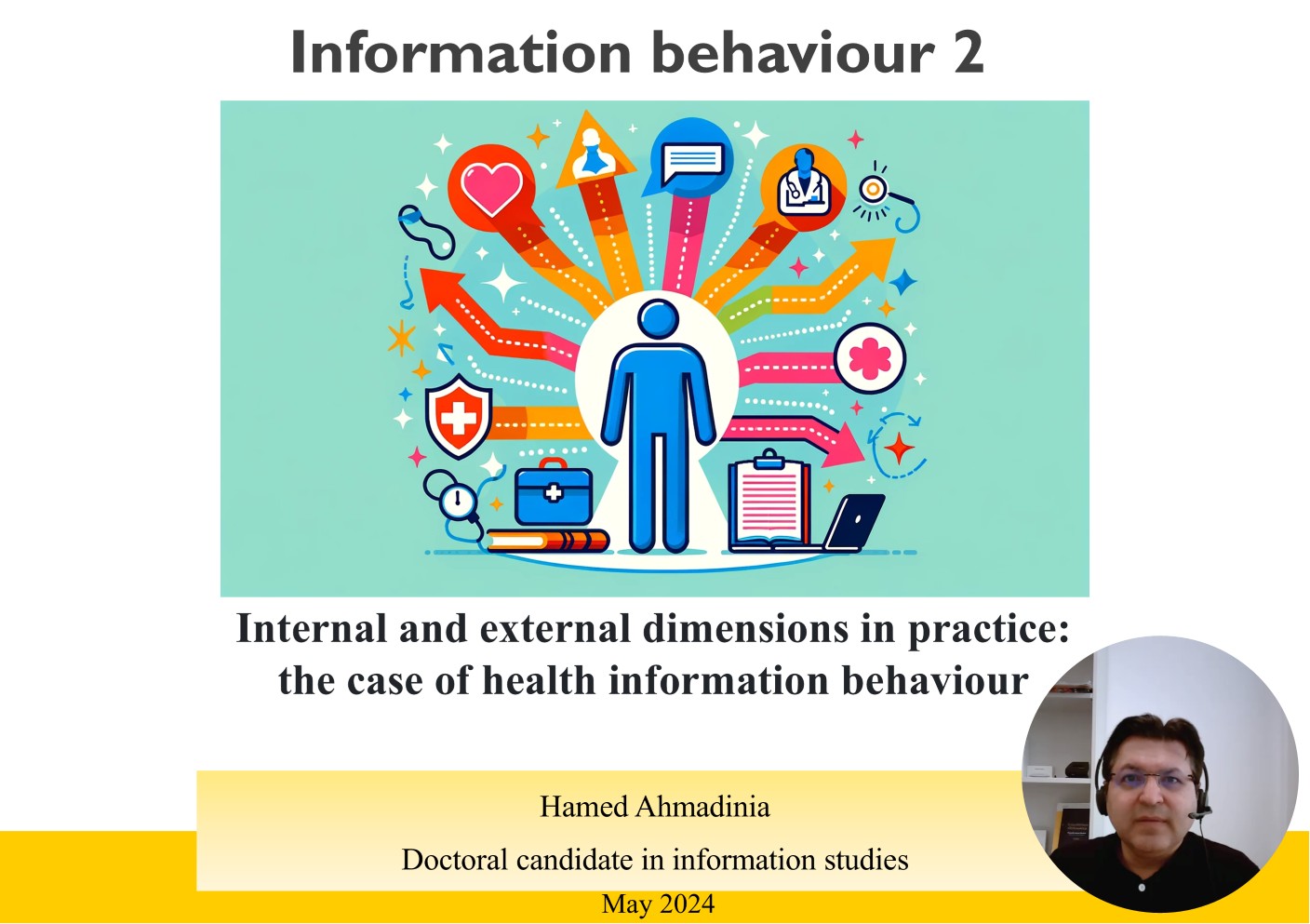
This course section examines how personal, social and contextual factors shape health-information-seeking behaviour. It considers the barriers and facilitators that affect how people search for, receive, evaluate and use health information.
The section introduces theoretical models used to study health information behaviour, including the Health Belief Model, the Longo health information model and the Comprehensive Model of Information Seeking.
Learning outcomes
After completing the section, students should be able to:
- explain the concept of health information behaviour;
- identify personal and contextual influences on information seeking;
- distinguish between barriers and facilitators in health-information-seeking processes;
- describe major models of health information behaviour;
- compare the assumptions and purposes of different theoretical models;
- apply an appropriate model to a practical case;
- analyse health information services from a user perspective; and
- reflect critically on the relationship between information, health beliefs and health action.
Course content
- Health information needs
- Health-information-seeking behaviour
- Internal and external influences on information behaviour
- Barriers to accessing and using health information
- Facilitators of health information seeking
- Health beliefs and perceived susceptibility
- Health Belief Model
- Longo health information model
- Comprehensive Model of Information Seeking
- Application of models to health information services
Teaching and learning methods
Students receive recorded lectures, presentation materials and selected academic readings. Learning activities include group discussion, application of models, peer feedback and reflective learning diaries.
Assessment
Assessment is based on:
- active participation in group discussions;
- engagement with assigned readings;
- feedback on the contributions of other students; and
- reflection on learning through a course diary.
Åbo AkademiHealth Belief ModelHealth informationInformation behaviourInformation seeking
READER REACTIONS
How did this post land with you?
DISCUSSION
0 commentsReader comments
Comments are currently closed for this post.
Loading comments…